Leave Your Message

Top China Three Phase Power Transformer Manufacturers

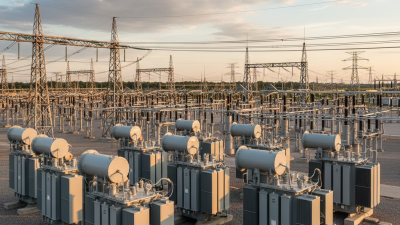
Choosing among the top China Three Phase Power Transformer manufacturers requires more than comparing prices. Buyers must examine engineering depth, factory capacity, testing discipline, and long-term service support. A transformer may look excellent in a catalogue. Its real performance appears under heat, load changes, voltage stress, and years of operation.

William Stanley Jr., an early transformer pioneer, described the transformer as “the heart of the alternating-current system.” That observation still matters. A reliable Three Phase Power Transformer supports stable distribution, protects connected equipment, and reduces avoidable energy losses. In practical projects, details such as silicon steel quality, winding arrangement, cooling design, insulation materials, and impedance control can decide operating results.

Look closely at the evidence.

Leading Chinese manufacturers usually provide routine test reports, type-test records, factory inspection procedures, and documentation for IEC or other applicable standards. Experienced suppliers also explain noise levels, temperature rise, partial discharge performance, and maintenance intervals clearly. These details help buyers compare products fairly, not emotionally.

However, no manufacturer is perfect. Some websites present impressive specifications but offer limited information about field performance. That gap deserves attention. Project owners should request verified references, inspect production lines when possible, and confirm spare-parts support before signing contracts.

The best choice depends on application. Utility substations, renewable-energy plants, industrial facilities, and commercial buildings require different priorities. This guide introduces notable Chinese manufacturers through measurable capabilities, engineering experience, product reliability, and customer support. It also leaves room for doubt, because careful evaluation often reveals weaknesses that polished marketing hides.
Top China Three Phase Power Transformer Manufacturers

What a Three-Phase Power Transformer Does

Top China Three Phase Power Transformer Manufacturers

What a Three-Phase Power Transformer Does

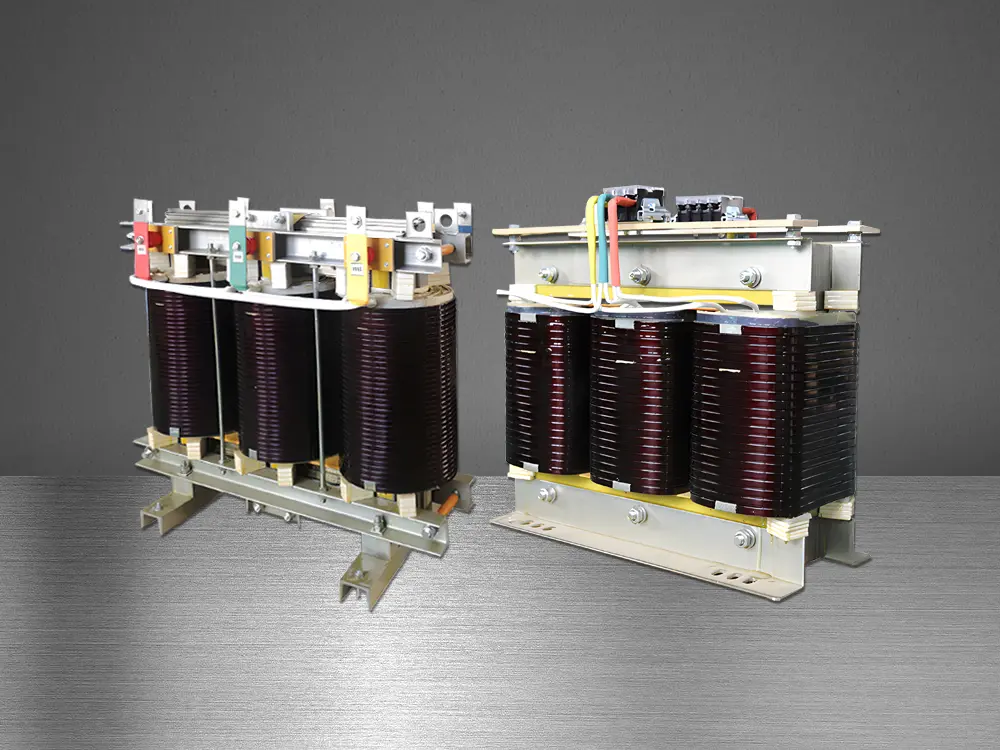
A three-phase power transformer transfers electrical energy between circuits through electromagnetic induction. It changes voltage levels without changing the power frequency. High-voltage electricity enters the primary windings. Magnetic flux then induces a new voltage in the secondary windings.

This design supports factories, substations, commercial buildings, and renewable energy systems. Three phases deliver smoother power than single-phase equipment. The transformer also helps reduce transmission losses over long distances. In practice, technicians inspect oil temperature, winding resistance, insulation condition, and unusual vibration. A small temperature rise can reveal a serious cooling problem later. No transformer is perfectly efficient. Copper losses, core losses, and poor loading still waste energy. I have seen specifications look excellent on paper, yet installation conditions changed the actual result. Ambient heat and unbalanced loads are often underestimated.

Tips: Confirm the input and output voltages before selection. Check the required capacity, cooling method, frequency, and insulation class. Leave enough ventilation around the enclosure. Measure phase balance during commissioning. Record temperature readings regularly, not only after a fault. A reliable maintenance log can expose gradual changes early. Do not rely on nameplate capacity alone; real load patterns matter.

How China’s Three-Phase Transformer Industry Is Structured

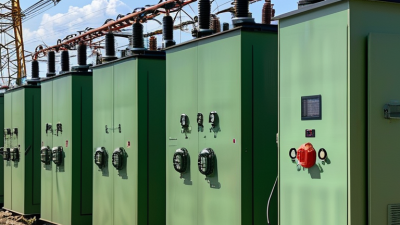
China’s three-phase transformer industry is organized through several manufacturing layers. Large state-linked groups often handle utility-scale projects and high-voltage equipment. Specialized private factories serve industrial parks, commercial buildings, and renewable-energy sites. Smaller workshops may focus on dry-type units, control cabinets, or replacement parts. This structure creates flexibility, but quality can vary between suppliers.

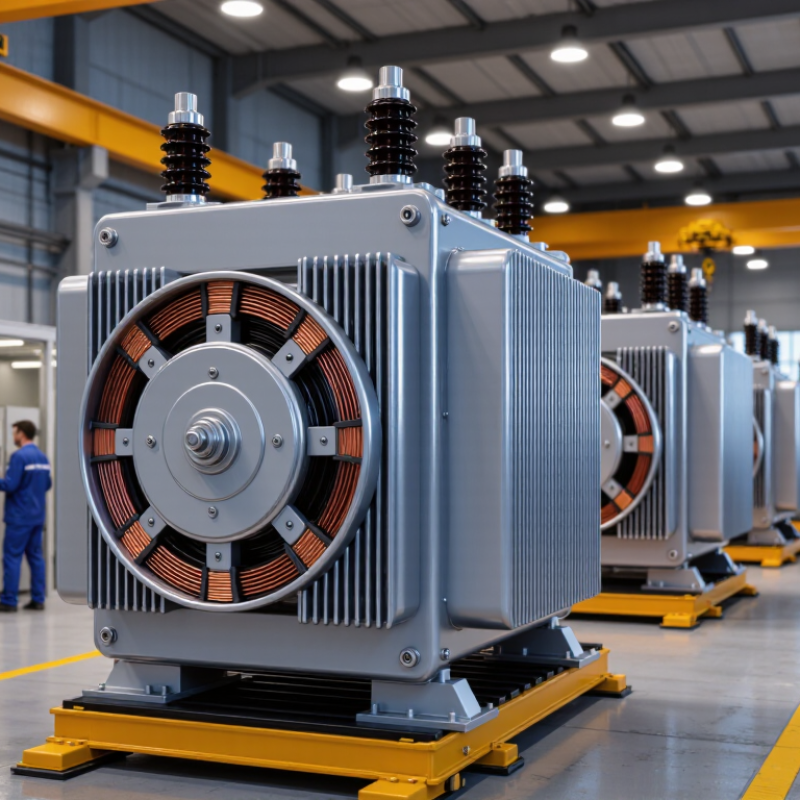
Production is usually supported by regional supply networks. Steel core materials, copper windings, insulation systems, tanks, bushings, and monitoring devices come from different technical suppliers. A factory may design the transformer, while outside partners produce key components. Experienced buyers inspect winding alignment, insulation thickness, oil leakage protection, and factory test records. They should also verify temperature-rise results and partial-discharge data. Paperwork alone is not enough.

Export-oriented manufacturers commonly build equipment around international standards and local grid requirements. They adjust voltage ratios, frequency, enclosure protection, cooling methods, and terminal layouts for each project. Site conditions matter. A dusty factory, coastal substation, or high-altitude facility can require different materials and clearances. Some suppliers communicate well before production, then respond slowly after delivery. That weakness deserves attention. Independent inspection, clear acceptance clauses, spare-part planning, and witnessed testing reduce uncertainty without replacing engineering judgment.

Key Technologies Used by Chinese Transformer Manufacturers

Chinese three-phase power transformer manufacturers are adopting technologies shaped by rising grid demand and stricter efficiency requirements. The International Energy Agency’s Electricity 2024 report projects global electricity demand will grow by about 4% annually through 2026. That pressure makes lower losses and stable operation essential. Modern production lines use automated winding, vacuum drying, and controlled insulation curing. These steps reduce moisture, improve dielectric strength, and limit production variation.

Core design is also changing. Many manufacturers combine grain-oriented silicon steel with optimized magnetic flux paths, reducing no-load losses and audible noise. Some projects use amorphous-metal cores, although higher material costs can complicate procurement. The U.S. Department of Energy’s 2016 efficiency analysis showed that distribution transformers consume substantial electricity across their service life, making small efficiency gains financially meaningful. It is not only about the nameplate rating.

Condition monitoring adds another layer. Fiber-optic temperature sensors, dissolved-gas analysis, and partial-discharge detection can identify overheating or insulation deterioration before a shutdown. IEC 60076 provides the main testing framework for power transformers, including temperature-rise and insulation requirements. Chinese factories increasingly connect test benches with digital quality records, improving traceability from copper conductor to final oil filling. However, digital monitoring is not automatically intelligent. Poor sensor calibration, incomplete field data, and rushed commissioning can still weaken decisions. That limitation deserves more attention.

This chart presents common nominal voltage classes used in China’s power transmission and distribution systems for three-phase transformers. Chinese transformer manufacturers typically support these voltage levels through technologies such as silicon-steel or amorphous-metal cores, vacuum pressure impregnation, oil-immersed insulation, on-load tap changers, temperature monitoring, and digital condition diagnostics. The figures represent standardized grid voltage classes, not individual company performance.

Top China Three-Phase Power Transformer Manufacturers

China’s top three-phase power transformer manufacturers are increasingly judged by measurable field performance, not factory size alone. The IEA’s Electricity 2025 report states that China’s electricity demand rose by about 7% in 2024. This growth increases pressure on grid equipment, especially in industrial parks, renewable projects, and urban substations.

Reliable manufacturers should demonstrate compliance with IEC 60076 and relevant Chinese GB standards. Buyers should examine no-load losses, load losses, temperature rise, short-circuit strength, and partial-discharge results. A strong supplier also provides factory acceptance testing, traceable materials, and clear maintenance records. Details matter. A loose terminal can become a costly outage.

Recent industry assessments, including the U.S. Department of Energy’s 2024 transmission study, highlight transformer shortages and long procurement cycles. Chinese manufacturers with flexible production, tested core materials, and export documentation can reduce project delays. Still, catalogue ratings may not reflect actual site conditions. Ambient temperature, harmonics, humidity, and uneven loading can change performance. This is where technical communication becomes essential. Some evaluations remain too focused on price. That is a weakness worth challenging. On-site inspection, witnessed testing, and independent certification provide stronger evidence than promotional claims.

How to Evaluate and Choose a Chinese Transformer Manufacturer

Top China Three Phase Power Transformer Manufacturers

Choosing a Chinese transformer manufacturer requires more than comparing quotations. The IEA’s Electricity Grids and Secure Energy Transitions report says annual global grid investment must exceed 600 billion dollars by 2030. This pressure increases demand for reliable equipment, not merely lower prices. Ask for factory test records, winding-loss data, temperature-rise results, and short-circuit test evidence. IEC 60076 compliance should be verified through complete reports, not a logo on a brochure.

A practical assessment should include a factory audit. Check the cleanliness of the winding area, vacuum-drying controls, oil storage, and final inspection process. Review material traceability from conductor to assembled tank. The U.S. Department of Energy’s Large Power Transformer Study found that over 70% of large transformers were at least 25 years old. This highlights the value of maintainability, spare parts, and documented service support. Request references from installations with similar voltage, capacity, climate, and loading conditions. A polished website proves little.

Tips: Compare total ownership cost, not only the purchase price. Confirm warranty coverage, delivery penalties, routine test scope, and remote technical support in writing. Ask whether independent inspectors may witness testing. Verify ISO 9001 procedures, but do not treat certification as proof of electrical performance. One overlooked detail is often the cooler design. It can affect noise, losses, and maintenance. A low quote may be attractive. It may also hide thinner documentation, longer repairs, or unsuitable accessories. Reflect carefully before deciding.